


“Dova represents the kind of mission I have been building toward my entire career. It brings together science, technology, commercialization, and purpose in a way that feels truly transformative.”
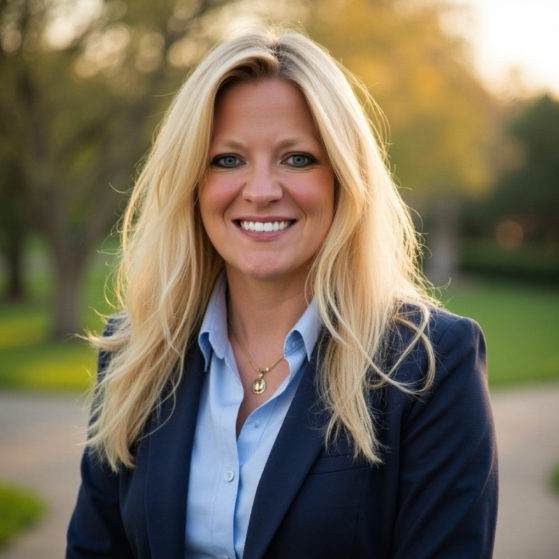
Dova extends a warm welcome to Nikki Woodlief, who has joined Dova as Vice President of Business Development. Nikki brings a wealth of expertise in healthcare technology, strategic partnership development, and commercial growth. She has a demonstrated background in helping healthcare organizations develop solutions that improve patient care, advance clinical research, and enable better decision-making.
Prior to joining our team, she has led commercial growth for innovative healthcare companies, from Fortune 500 organizations to Stanford- and Duke-originated startups, partnering with pharma and life sciences organizations, health systems, academic medical centers, and strategic partners to bring AI-driven and data-enabled innovations into real-world adoption.
Her expertise in healthcare technology, in combination with her MBA in Healthcare Management, qualify her as a leader at the intersection of business, technology, and healthcare.
Nikki will play a crucial role in expanding Dova’s partnerships and advancing our mission to develop data-driven, innovative solutions that improve gastrointestinal (GI) healthcare and patient outcomes.
We had a conversation with Nikki to learn more about her background and why she chose Dova as the next step in her career.
Tell us about yourself and what drew you to working with Dova Health.
I’ve spent my career helping healthcare technologies move from promise to real-world adoption. Across AI, clinical research, medical technology, and the healthcare ecosystem, I have seen technologies come to market. Many make meaningful contributions by improving workflows, creating efficiencies, or making existing processes faster. But Dova is different from anything I have experienced in my career because it is asking a much bigger question: what if the medical images we already capture could become measurable, scalable intelligence that changes how disease is researched, understood, measured, and monitored?
That question is what makes Dova a game changer.
Dova’s TITRATE work was the moment I knew Dova was different. It suggests AI can complement expert assessment by identifying therapeutic-response signals that may otherwise go undetected. That is not incremental innovation. It is the kind of signal that can reshape conversations in clinical development, research strategy, and patient care, pointing to the broader potential for AI to enhance clinical research, pharmaceutical development, and ultimately patient outcomes.
What also inspired me was the team. Dova brings together clinicians, technologists, scientists, and innovators who are building with purpose. They are challenging assumptions in GI research and care. They are asking how we can see disease more clearly, measure it more consistently, and use that intelligence to accelerate discovery and improve outcomes.
Dova represents the kind of mission I have been building toward my entire career. It brings together science, technology, commercialization, and purpose in a way that feels truly transformative.
I joined Dova because I believe this company can help define the next era of clinical research and care, one where imaging becomes intelligence we can act on.
What initially drew you to working at the intersection of healthcare, data, and technology?
I believe many of us are drawn to healthcare because of someone we love. For me, it was my mother, who lived with multiple sclerosis. Caring for her shaped the way I saw healthcare from an early age. Her story taught me strength, independence, resilience, and the importance of exploring roads less traveled.
That experience is part of what drew me to the intersection of healthcare, data, and technology. Healthcare keeps the mission grounded in people. Data can reveal patterns that are difficult to see in isolation. Technology can help scale that insight so it can reach more patients, more clinicians, and more researchers.
When those three come together, we have the opportunity to fundamentally change lives.
Throughout my career, I have been motivated by the same question: how do we take powerful innovation and turn it into something practical, measurable, and meaningful in the real world? That is where I feel most at home. It is the space where science becomes usable, technology becomes trusted, and insight becomes action.
Your work has spanned health systems, clinical research, and real-world evidence. How have these experiences shaped your perspective on healthcare innovation?
Working across health systems, clinical research, and real-world evidence has taught me that healthcare innovation cannot succeed in a vacuum. It has to work clinically, operationally, economically, and strategically.
Health systems taught me the realities of adoption. Innovation has to fit into complex environments, earn the trust of clinicians, and solve problems that matter inside real care settings. Clinical research taught me the importance of evidence, timelines, endpoints, and the decisions that determine whether therapies move forward. Real-world evidence taught me the power of data to reveal patterns, support discovery, and connect research to patient populations in a more meaningful way.
Those experiences shaped my belief that the best healthcare innovations do more than create efficiency. They help people make better decisions. They connect stakeholders who need each other: pharma, health systems, academic medical centers, researchers, clinicians, and patients. And they turn data into something actionable.
That is why Dova resonates so strongly with me. It sits at the center of all of those worlds.
Where do you see Dova adding the most value to healthcare organizations today, and how do you translate that into meaningful partnerships?
I see Dova adding value by helping organizations turn imaging into intelligence we can act on.
For pharmaceutical and life sciences companies, Dova has the potential to reshape how therapies are evaluated, how clinical trials are designed, and how go/no-go decisions are supported. Better imaging intelligence can mean clearer therapeutic signals, stronger evidence generation, smarter development decisions, and a better path to bringing meaningful therapies to patients.
For health systems and academic medical centers, Dova points toward a future where imaging is not only interpreted by expert clinicians, but also quantified, scaled, and connected to research, clinical insight, and more informed care. It creates an opportunity to turn clinical data into a more powerful engine for discovery, decision-making, and patient impact.
For CROs and strategic research partners, Dova opens the door to a more strategic sponsor value proposition: pairing the operational excellence they already deliver with deeper imaging intelligence. That means helping sponsors turn imaging from a study requirement into a strategic evidence asset, giving teams the ability to see more, learn earlier, and generate richer, more actionable evidence from every image, every visit, and every study.
Meaningful partnerships start with understanding what each organization is trying to solve. The goal is not simply to introduce technology. The goal is to align Dova’s capabilities with the moments where better imaging intelligence can create measurable value, whether that is accelerating research, strengthening evidence, supporting clinical decision-making, or helping organizations unlock insight from data they are already collecting.
What is a hobby or activity outside of work that you’re passionate about?
Outside of work, travel is one of my greatest passions. I have been fortunate to visit all seven continents, including Antarctica, and I love exploring the world with my family. Closer to home, I spend a lot of time hiking with my Great Pyrenees, Walter, who is convinced he is the main character in every room. I have created such a full personality for him over the years. At this point, Walter believes he already has the personality for YouTube. The only thing holding him back is my production schedule.
